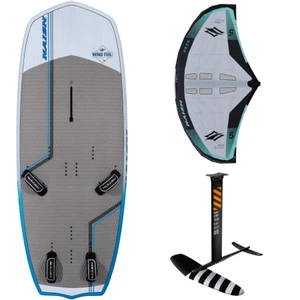
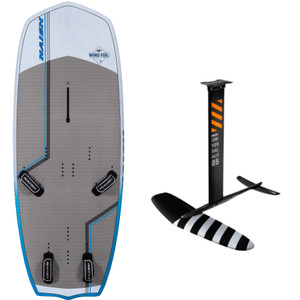
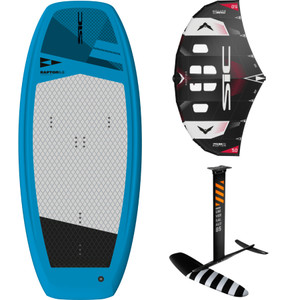
Beginner Wing Foil Packages

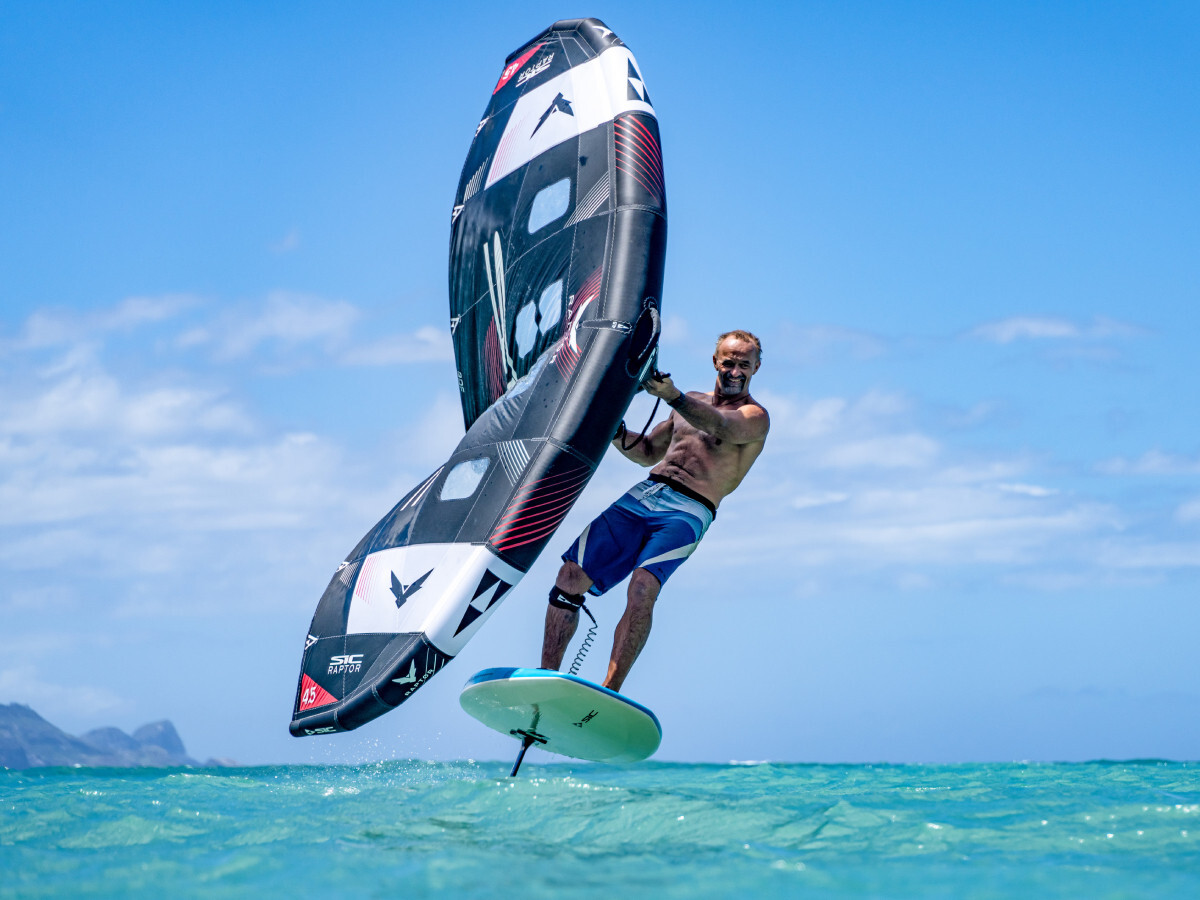
5 Critical Factors for Choosing the Perfect Beginner Wing Foil Package
Selecting a wing foil package isn't just about picking a brand; it’s about balancing physics. If one component is mismatched, your progression will stall. Here are five factors our experts use to build the perfect bundle:
1. Total Rider Weight vs. Board Volume
The most common mistake is buying a board that is too small. For your first package, follow this "Stability Formula" based on your weight in pounds:
-
Beginners: Your weight (converted to kg) + 30 to 40 liters of volume.
-
Example: A 175 lb (80kg) rider should look for a 110L–120L board.
-
-
Intermediate: Your weight + 10 liters.
-
Example: A 175 lb rider would move down to a 90L–100L board.
-
-
Advanced: Your weight minus 15 liters.
-
Example: A 175 lb pro-level rider might use a 65L board for maximum agility.
-
Why it matters: A board with enough volume allows you to stand stably while the wing is neutral. If the board sinks too deep (under-volumed), it is significantly harder to generate the initial speed required to get onto the foil.
2. Front Wing Surface Area (The "Lift" Factor)
The foil’s front wing is your engine's displacement.
-
Large (1750cm² - 2400cm²): Best for beginners and heavy riders. It provides "early lift," meaning you can get on the foil at very low speeds.
-
Medium (1200cm² - 1500cm²): Best for high winds or riders looking for more speed and maneuverability.
-
Pro Tip: Look for High Aspect (HA) wings for glide, or Lower Aspect wings with higher volume for stability and easy learning.
3. Wing Size and Local Wind Conditions
You want to match your wing size to your local spot's average wind speed and riders weight:
-
Light Wind (8–15 knots): You’ll want a 4.5m to 7.0m wing depending on the riders weight
-
Moderate/High Wind (15–25 knots): A 3.5m to 5.0m wing is the "sweet spot" for most riders depending on weight and their front wing on their foil.
4. Mast Construction: Aluminum vs. Carbon
This is where you decide your budget vs. performance ratio:
-
Aluminum: Durable, cost-effective, and slightly heavier than carbon. Perfect for those learning to foil.
-
Carbon: Stiffer, lighter, and more responsive. Carbon is the choice for riders who want maximum "pumping" efficiency and plan to keep their gear for several seasons.
5. Inflatable vs. Rigid (Hard) Boards
This factor is often overlooked but dictates your lifestyle:
-
Inflatable Boards: (Like the STX or TAHE). Unbeatable for travel, storage in small apartments, and "ding" resistance. Modern carbon-plate tech makes these nearly as stiff as hard boards.
-
Rigid Boards: Offer the most direct "feel" and immediate response. If you have a van or live on the water, a hard board provides the ultimate performance edge.